Development

My development across the Expertise Areas.

Project context

Project gallery

5 projects

The work referred to throughout this section. Hover any card for the full backgrounder.

Project 3
01

Dressd

Helping children with brain damage dress independently.

Read more
01 · Project 3 · Adelante rehabilitation

Dressd

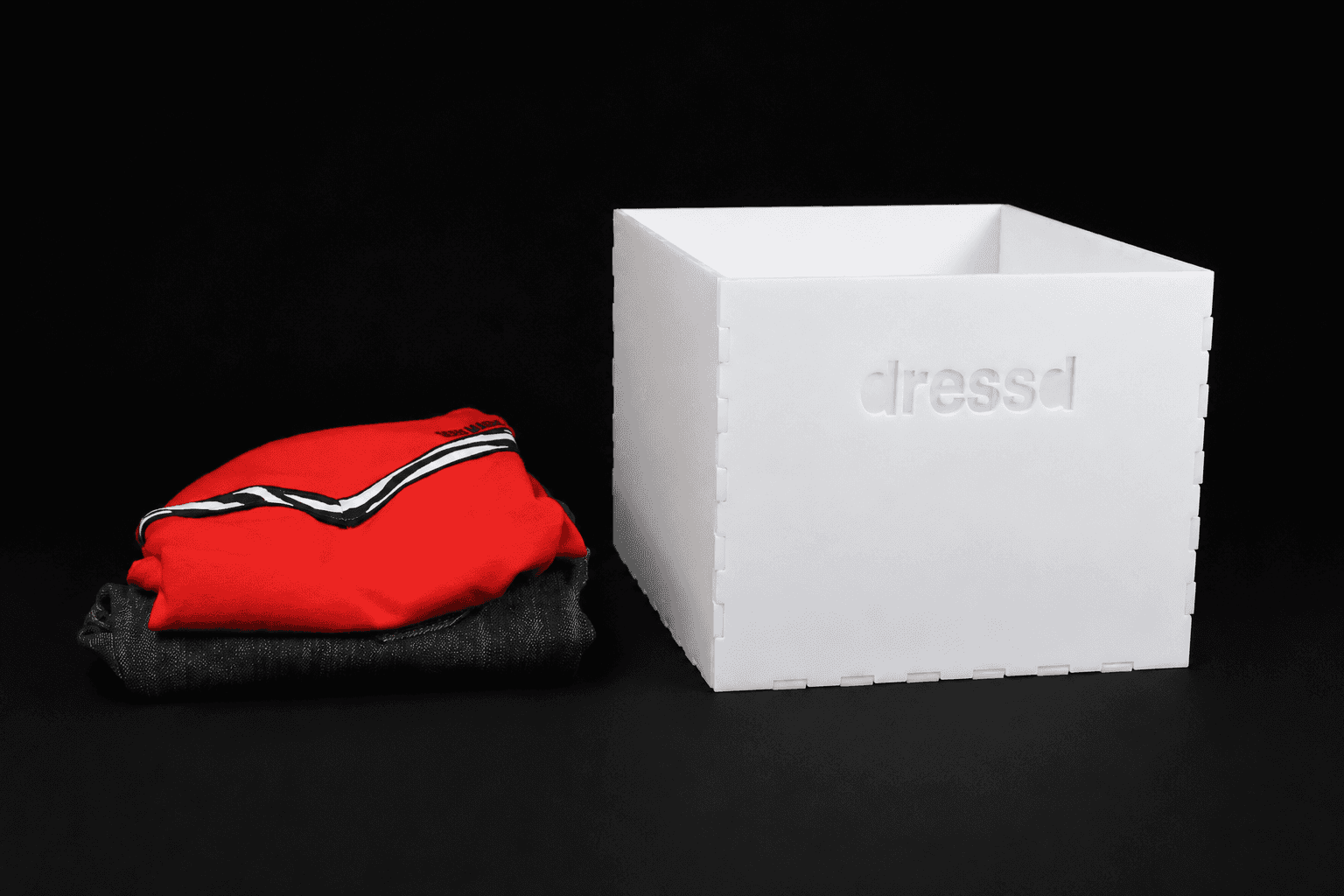
A rehabilitation project with Adelante, working with children with brain damage. It explored how children could be supported to get dressed on their own, leading to a hybrid physical–digital RFID system with multimodal instructions.

HealthcareRFIDInclusive design
Aesthetics of Interaction
02

Sensory Awakening Kit

Waking people up through and by their senses.

Read more
02 · Course · Sensory design

Sensory Awakening Kit

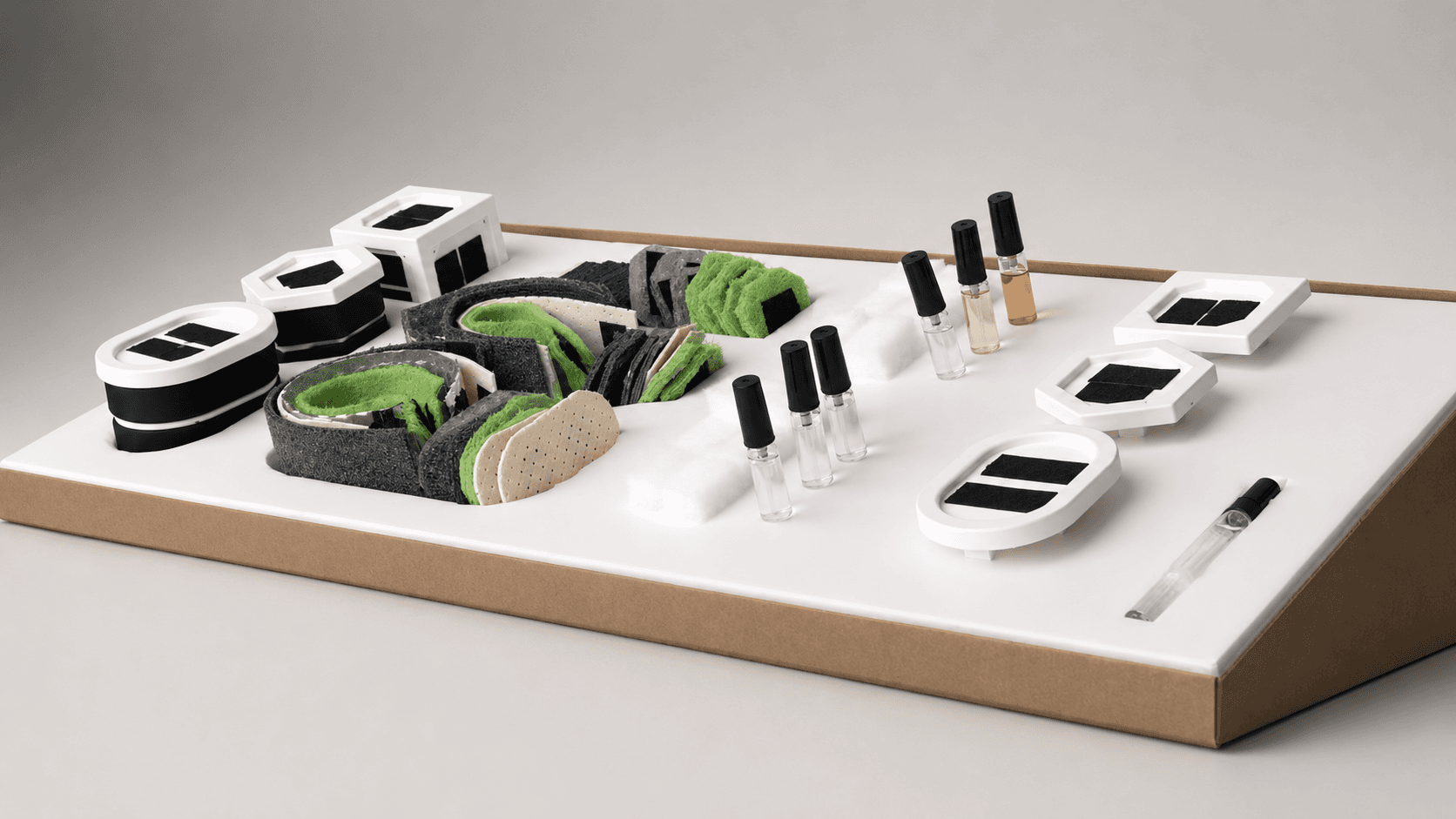
A course exploring how people can be “woken up” through and by their senses. The work resulted in a sensory awakening kit, a set of objects designed to re-sensitise the body to everyday perception.

Sensory designEmbodimentCraft
Multidisciplinary CBL
03

Plasma Car Air Purifier

An air purifier for cars, powered by plasma.

Read more
03 · Multidisciplinary CBL · AI innovation

Plasma Car Air Purifier

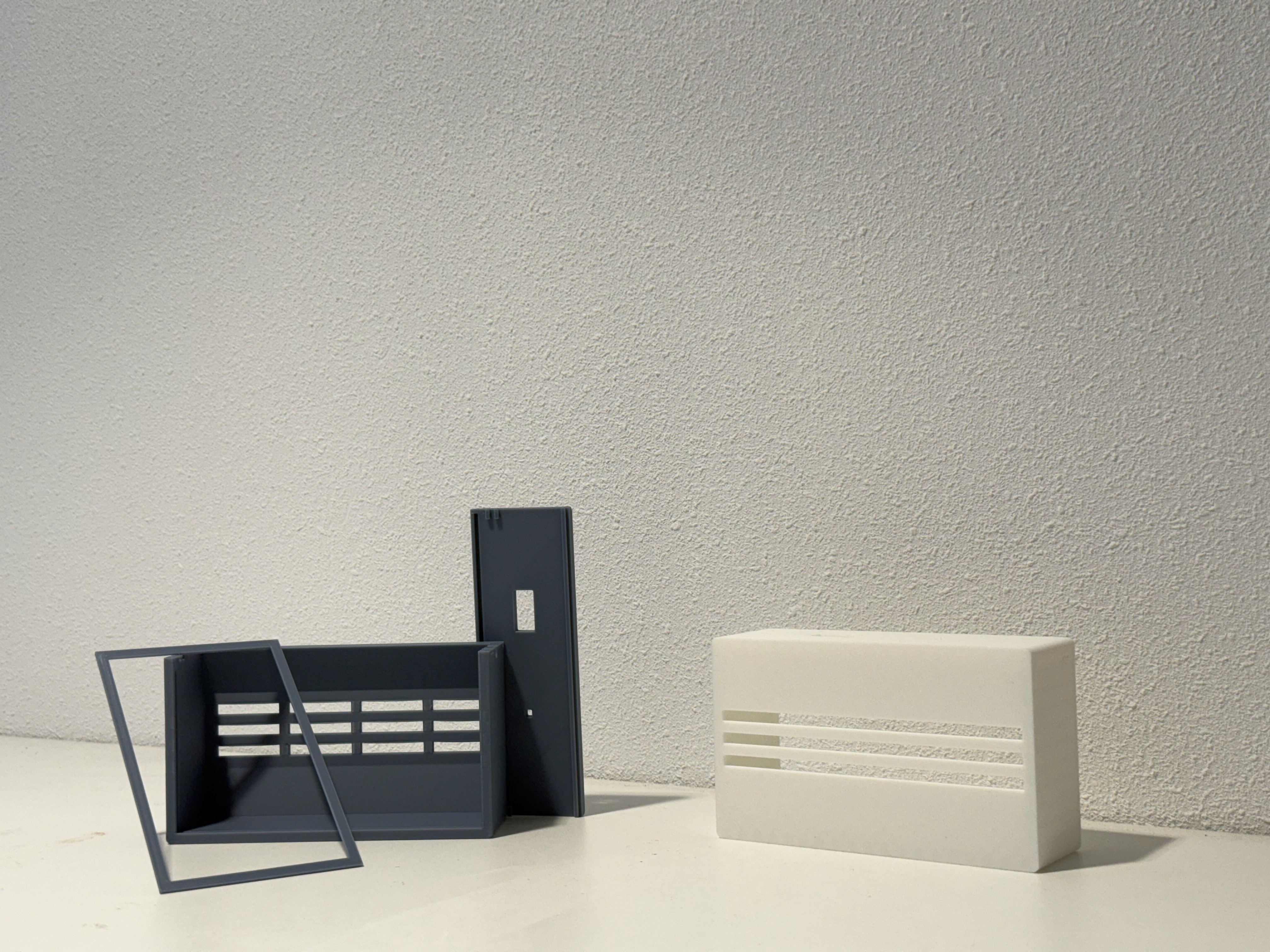
A multidisciplinary challenge-based project on AI innovation with portable plasma technology. Our group designed an air purifier for cars that uses plasma to clean the cabin air.

Plasma techAITeamwork
Internship
04

Philips Hue Product Management

Product Management on Philips Hue.

Read more
04 · Internship · Signify

Philips Hue Product Management

A Product Management internship at Signify, working on Philips Hue products. I learned how user insights, business strategy, technology, quality and launch decisions connect inside a corporate product ecosystem.

Product managementStrategyPhilips Hue
Final Bachelor Project
05

HoldOn

Phone-scam protection for older adults.

Read more
05 · Final Bachelor Project · AI & safety

HoldOn

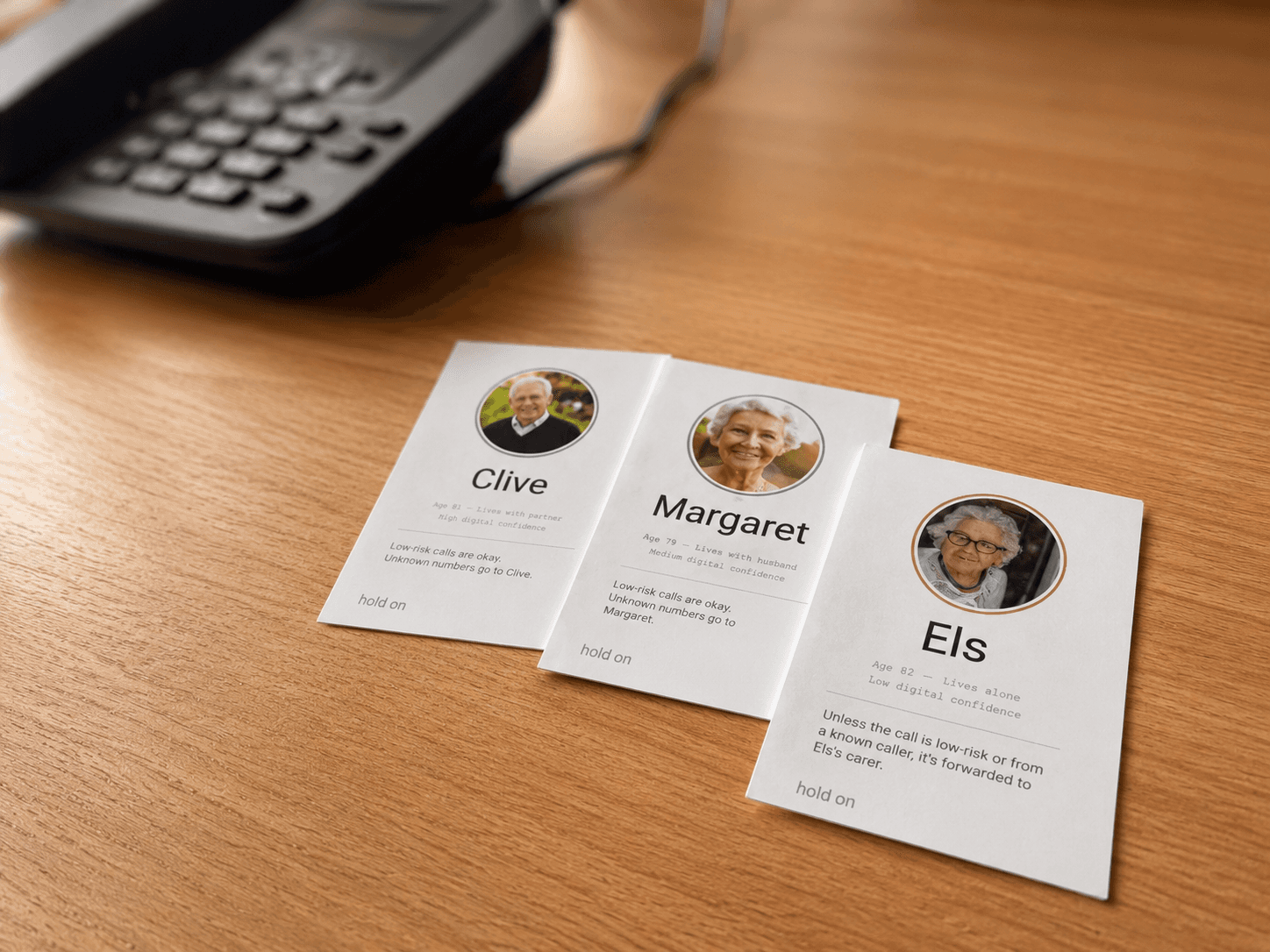
My Final Bachelor Project: phone-scam protection for older adults through an AI-mediated call-screening system. It offers a personalised system adapted to the needs of the user, allowing for the preservation of autonomy.

AISafetyOlder adults

Development of Expertise Areas

How my five expertise areas developed across my bachelor, internship and Final Bachelor Project.

Viewing Year 1.

Business &Entrepreneurship
User &Society
Math, Data& Computing
Creativity& Aesthetics
Technology& Realisation

Math, Data and Computing

Past

During my internship, I greatly developed in Math, Data and Computing. I regularly worked with large datasets using SQL, PowerBI and internal analytics platforms to support product decisions. I used data around sales, usage, reviews and subscriptions to understand product performance after launch and identify opportunities for improvement. I also developed live dashboards that my colleagues continue to use to review activation, adoption and user behaviour. This taught me to treat data as a tool for judgement rather than as a source of automatic answers. It also showed me how even quantitative data can have extremely valuable qualitative results in a project. I am unable to provide specific examples due to the NDA I have signed for my internship.

Present

Compared with my internship, Math, Data and Computing was not the expertise area that developed most during my Final Bachelor Project. In HoldOn, MDC was present, but more as an applied support layer than as the main area of growth.

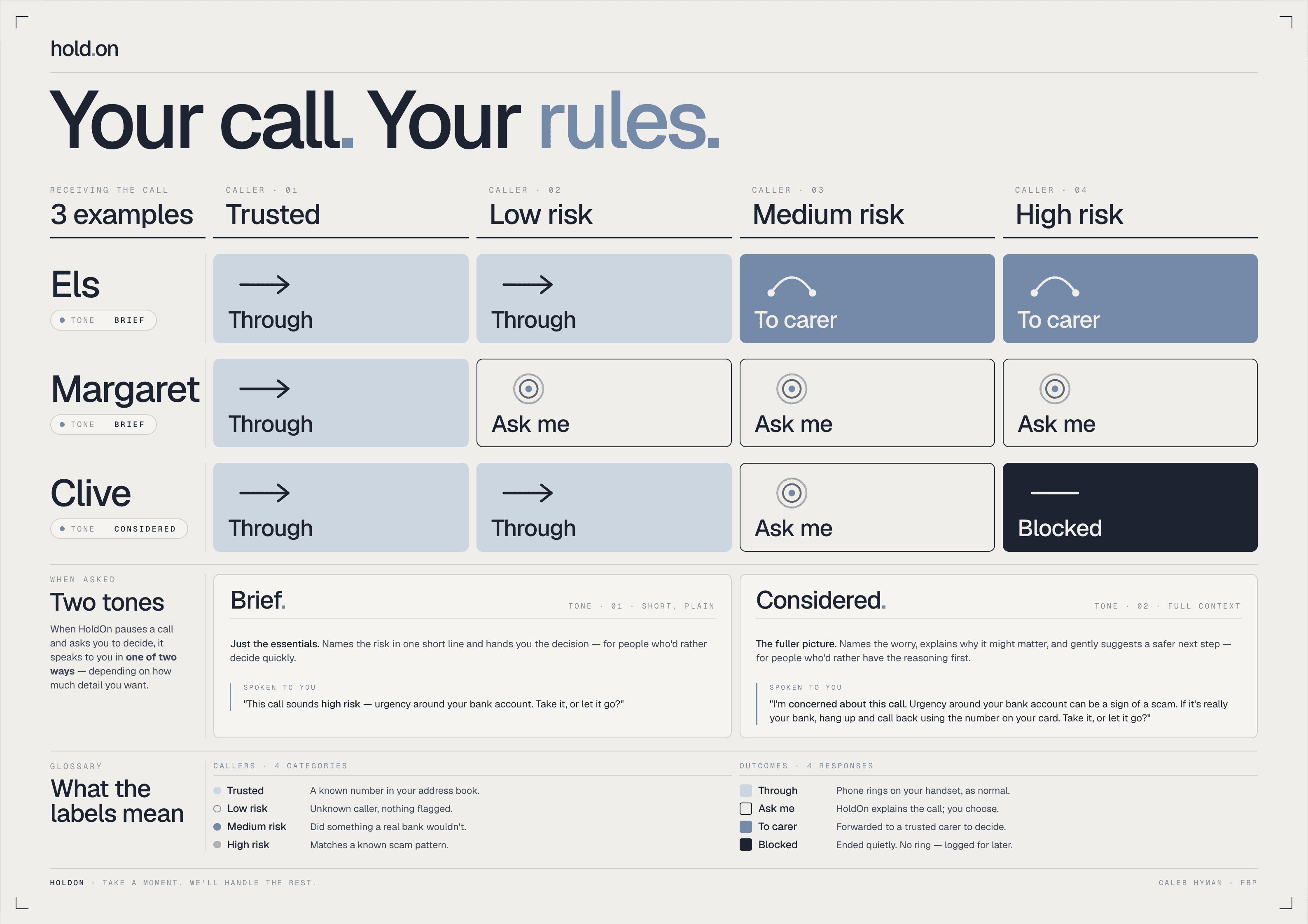
At the start of the FBP, one of my goals was to become more confident in making and justifying decisions under uncertainty. MDC contributed by helping me structure ambiguity. The AI call-screening logic required me to translate qualitative scam behaviours, such as urgency, authority, pressure and suspicious company claims, into low, medium and high-risk categories that the system could act on.

I also used structured AI outputs within the Twilio flow, so the classification could connect to the rest of the system. This taught me that AI in a design project is not just about producing an answer, but about making the output structured, explainable and useful for the next interaction. MDC was also applied through thematic analysis, interview comparison and the use of TAM and UTAUT to analyse technology acceptance.

Screenshot of poster used to explain the system behaviour of HoldOn and how it differs from user to user.


Overall, HoldOn showed that I can apply MDC appropriately within a design process, while recognising when it should not dominate. The project’s strongest challenges were social, ethical and experiential, so forcing a heavier data focus would not have served the project.