Development

My development across the Expertise Areas.

Project context

Project gallery

5 projects

The work referred to throughout this section. Hover any card for the full backgrounder.

Project 3
01

Dressd

Helping children with brain damage dress independently.

Read more
01 · Project 3 · Adelante rehabilitation

Dressd

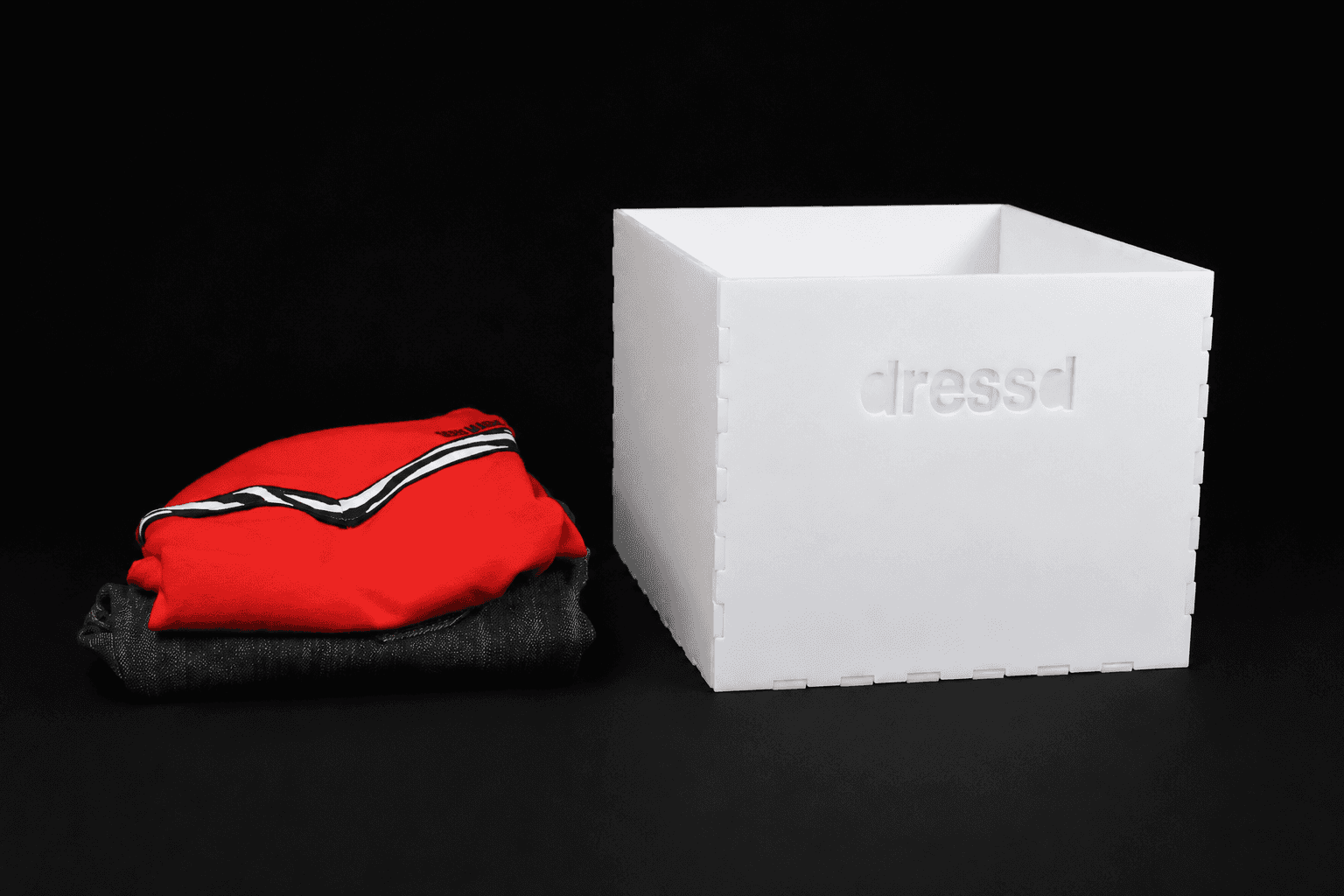
A rehabilitation project with Adelante, working with children with brain damage. It explored how children could be supported to get dressed on their own, leading to a hybrid physical–digital RFID system with multimodal instructions.

HealthcareRFIDInclusive design
Aesthetics of Interaction
02

Sensory Awakening Kit

Waking people up through and by their senses.

Read more
02 · Course · Sensory design

Sensory Awakening Kit

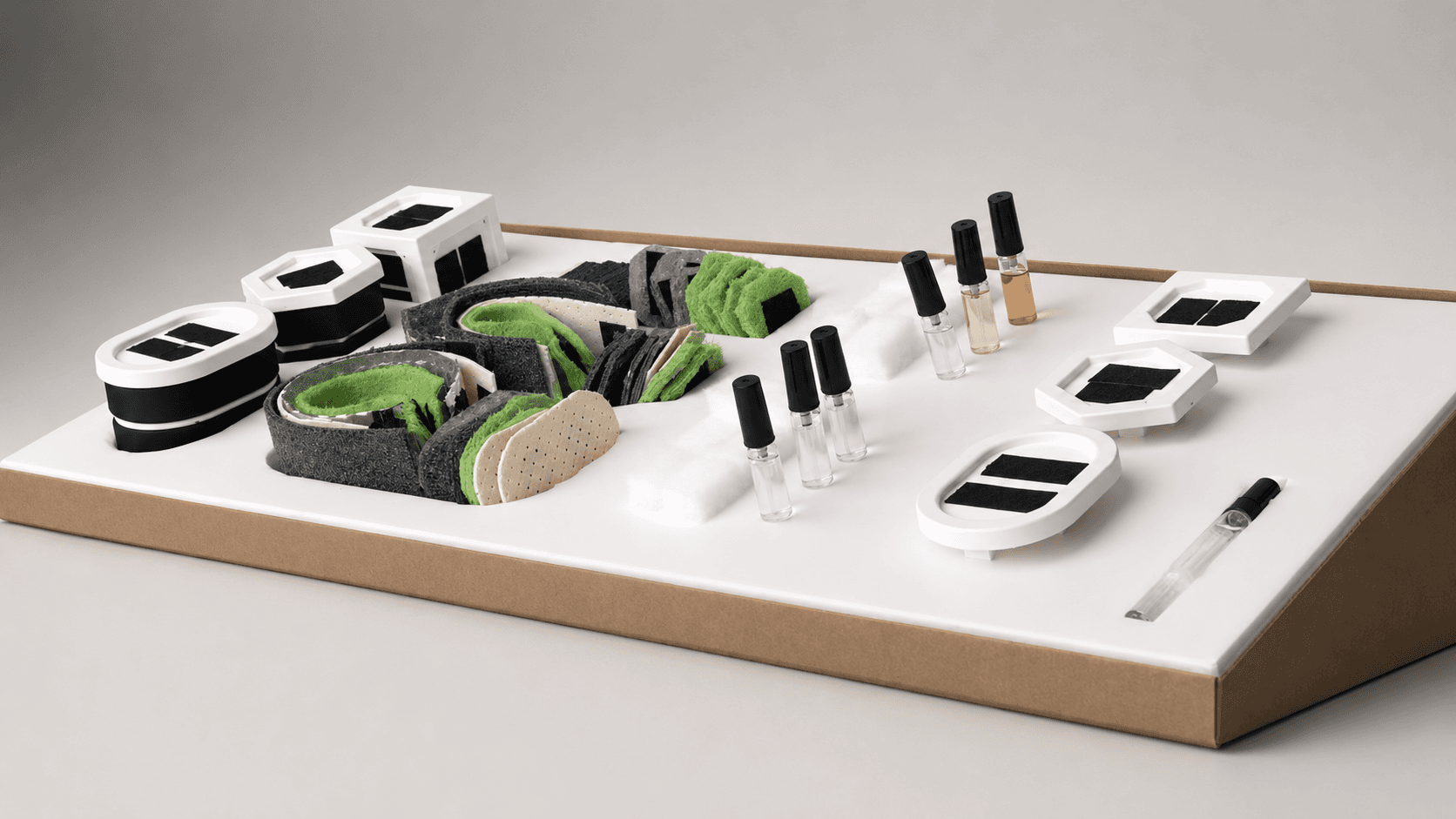
A course exploring how people can be “woken up” through and by their senses. The work resulted in a sensory awakening kit, a set of objects designed to re-sensitise the body to everyday perception.

Sensory designEmbodimentCraft
Multidisciplinary CBL
03

Plasma Car Air Purifier

An air purifier for cars, powered by plasma.

Read more
03 · Multidisciplinary CBL · AI innovation

Plasma Car Air Purifier

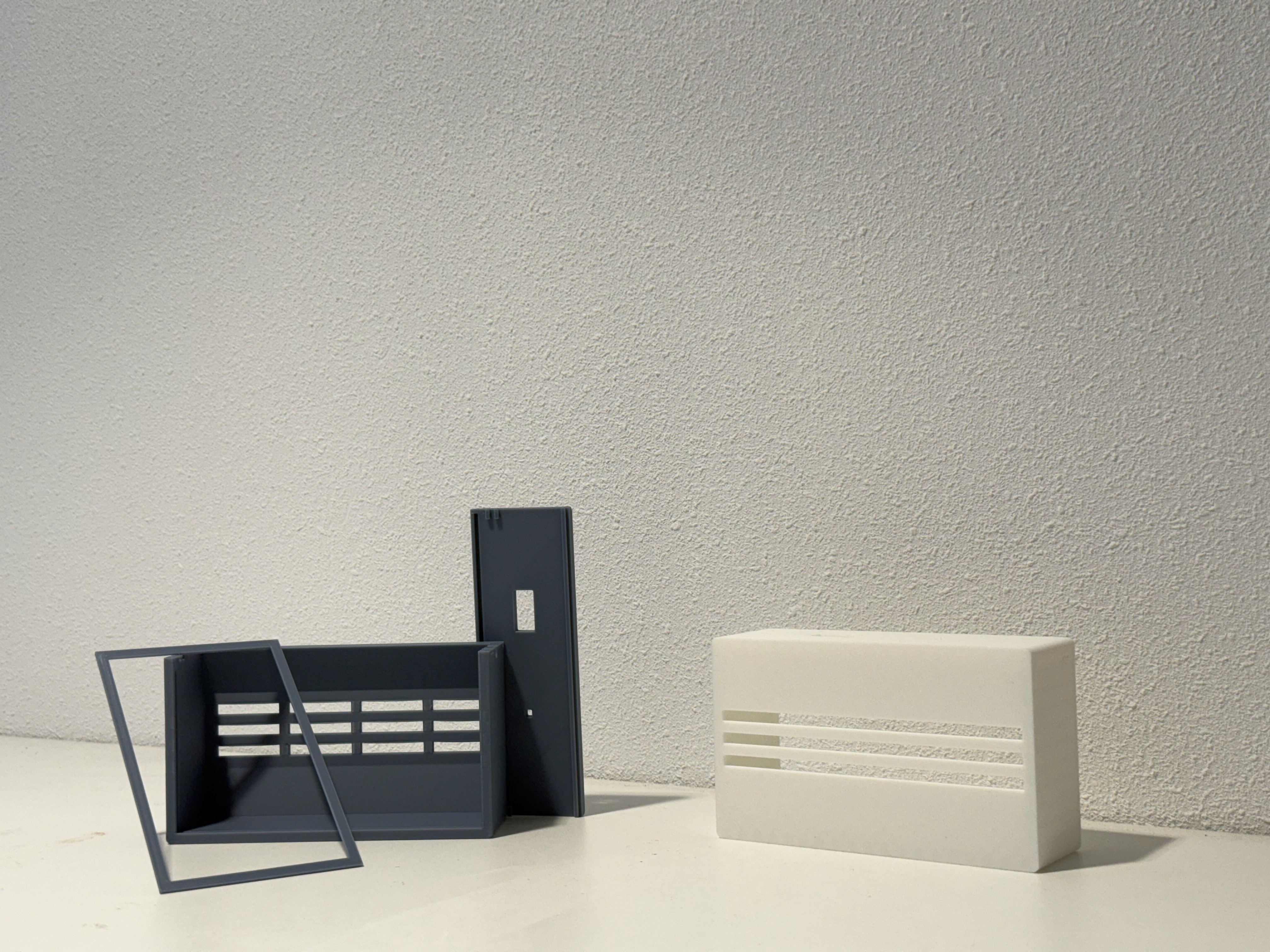
A multidisciplinary challenge-based project on AI innovation with portable plasma technology. Our group designed an air purifier for cars that uses plasma to clean the cabin air.

Plasma techAITeamwork
Internship
04

Philips Hue Product Management

Product Management on Philips Hue.

Read more
04 · Internship · Signify

Philips Hue Product Management

A Product Management internship at Signify, working on Philips Hue products. I learned how user insights, business strategy, technology, quality and launch decisions connect inside a corporate product ecosystem.

Product managementStrategyPhilips Hue
Final Bachelor Project
05

HoldOn

Phone-scam protection for older adults.

Read more
05 · Final Bachelor Project · AI & safety

HoldOn

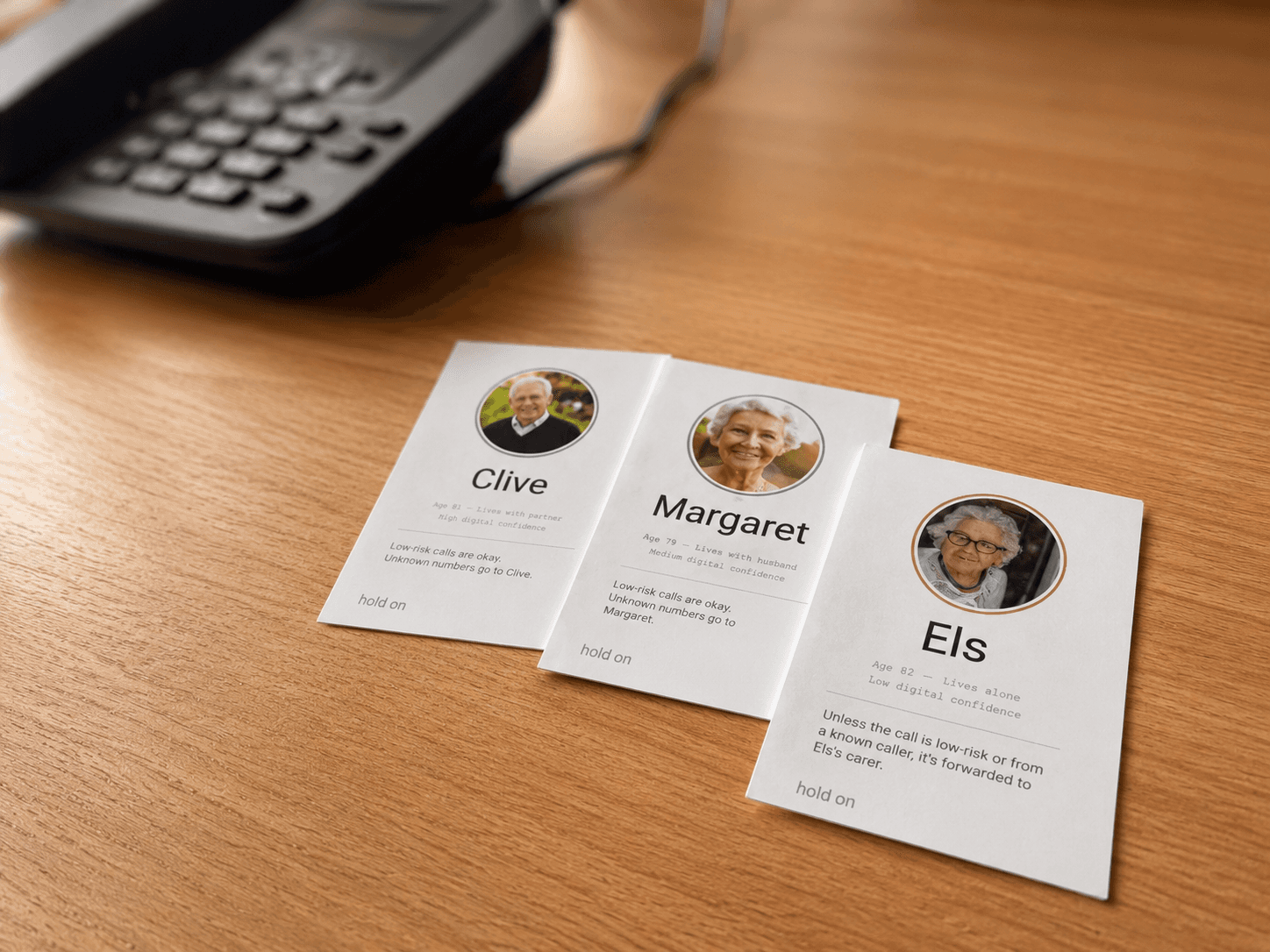
My Final Bachelor Project: phone-scam protection for older adults through an AI-mediated call-screening system. It offers a personalised system adapted to the needs of the user, allowing for the preservation of autonomy.

AISafetyOlder adults

Development of Expertise Areas

How my five expertise areas developed across my bachelor, internship and Final Bachelor Project.

Viewing Year 1.

Business &Entrepreneurship
User &Society
Math, Data& Computing
Creativity& Aesthetics
Technology& Realisation

Technology and Realisation

Past

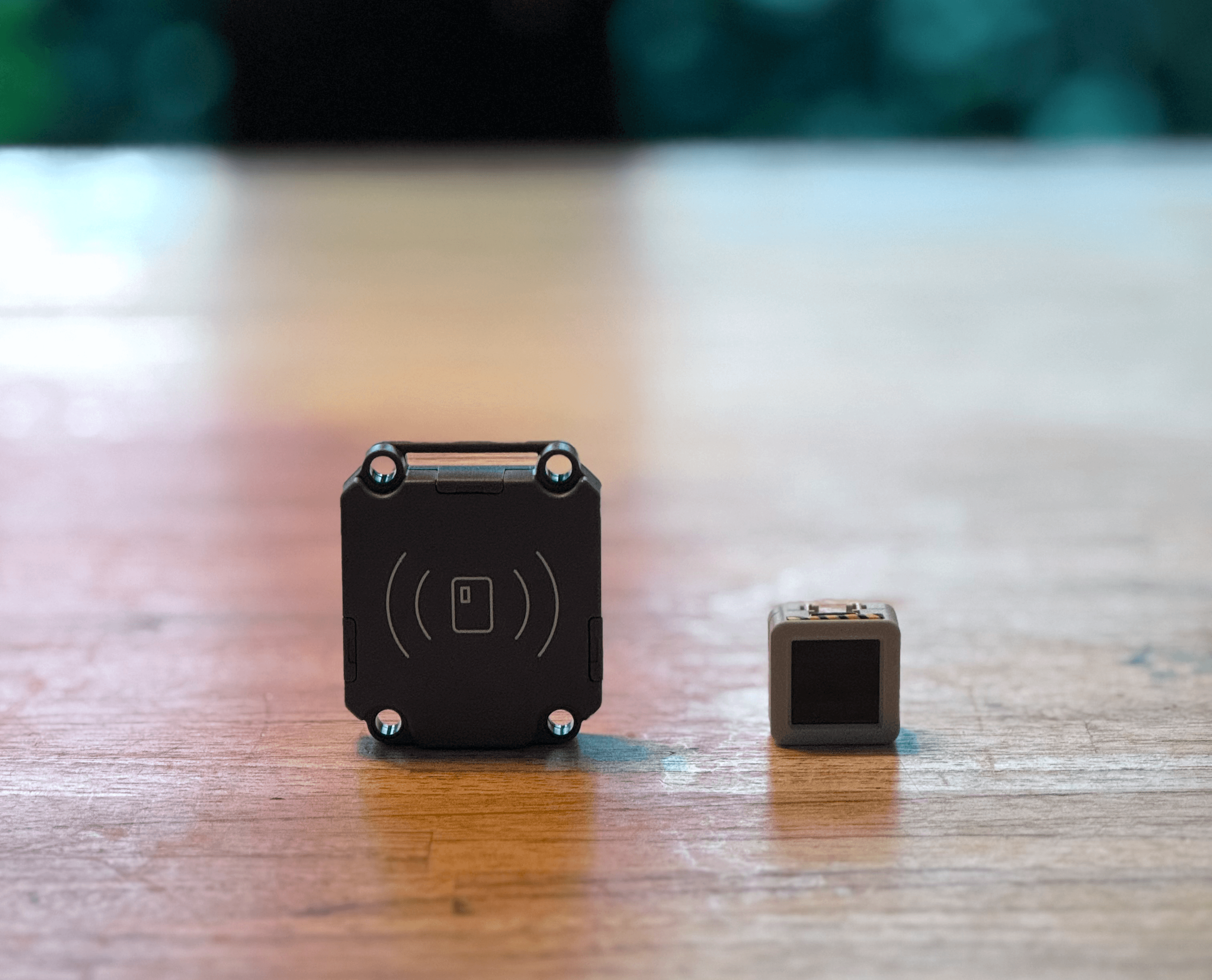
Technology and Realisation was not initially my strongest expertise area, but I developed significantly during Project 3. I was responsible for the electronics setup of our prototype, using an M5Stack Atom microcontroller and a UHF RFID scanner. This allowed the system to respond to children’s actions without invasive monitoring. The process taught me the importance of testing early, researching compatibility and understanding how technical choices affect the final user experience.


UHF RFID scanner and M5 Stack components from Project 3

During my internship, my relationship with technology shifted from building systems myself to understanding how technical decisions scale within a large organisation. Working with engineers and quality teams showed me that technology must be robust, maintainable and integrated into a wider product ecosystem. I began to see technology less as a feature to showcase, and more as an enabling layer for real user value.

Present

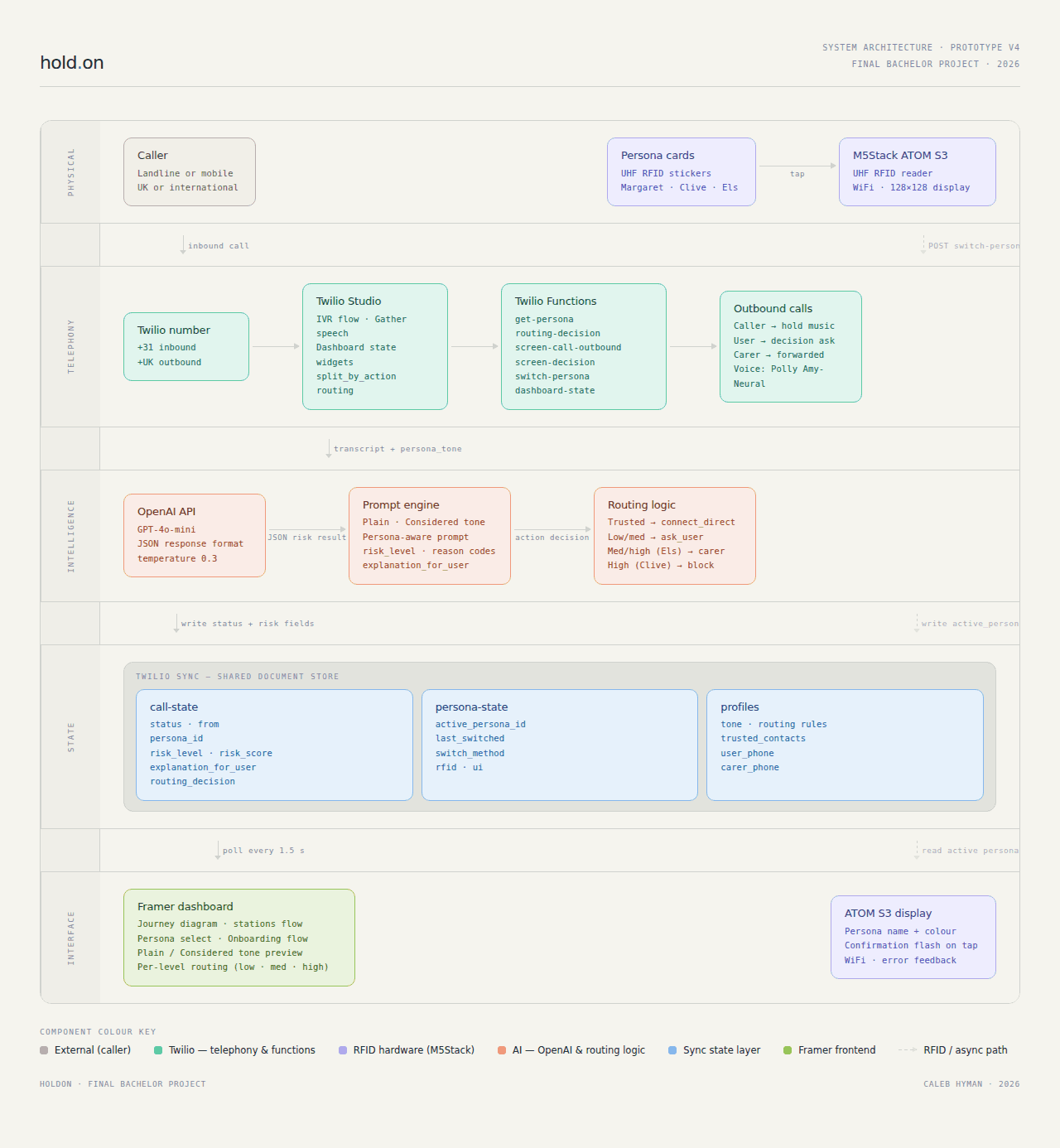
Technology and Realisation developed strongly during HoldOn because one of my FBP goals was to prototype and test the most promising direction in a way that allowed realistic evaluation. I achieved this by moving beyond a visual concept and building a working AI-mediated call-screening prototype using Twilio. People could phone a real number, speak to an AI receptionist and experience how the system might intercept and assess a call before it reached the older adult.


System Diagram for HoldOn


The first prototype created a minimum viable technical loop: it intercepted a call, asked the caller for their name and reason for calling, transcribed the response, and used AI to classify the risk level. Later iterations explored behaviours for low-, medium- and high-risk calls, trusted contacts, personalisation and caller verification.

This goal did not go exactly as planned. I initially imagined two neat rounds of testing with at least five users per round, but recruiting older adults was slower and more complex than expected. However, the project still involved older adult interviews, expert feedback, a bubble group and caller-side evaluation with people interacting directly with the AI receptionist. This gave the prototype broader validation than I first expected.

The most important learning was that technology should be used selectively. The value of HoldOn was not that it used AI, but that the technology created a protective pause before scam pressure reached the user and could easily integrate within the user’s existing setup and lifestyle. This strengthened my ability to connect technical feasibility to social and experiential purpose.